
Offshore Norge 104: Network Engineering for OT Cybersecurity
Recommended guidelines on cyber security baseline requirements for Operational Technology (OT) systems were published in June 2026. I reviewed them…
Recommended guidelines on cyber security baseline requirements for Operational Technology (OT) systems were published in June 2026. I reviewed them…

OT security is “hard” – engineering change control (ECC) makes patching slow and expensive, many OT devices and systems have no real support for zero trust (ZT)…

Two decades ago, we founded Waterfall with one purpose: to defeat nation-state attacks impacting OT environments and critical infrastructure.

Anthropic’s Claude Mythos is the latest example of a trend many of us in industrial cybersecurity have been warning about for years.

If only we could wave a magic wand and patch everything and zero-trust everything, just like with our IT networks, then our OT networks would be “secure”

Ask different questions, get different answers. What should you be asking your OT “secure” remote access (SRA) vendor?
Hardware-enforced OT Security solutions help industrial operators follow the latest multi-government OT security guidance

The UK National Cyber Security Centre (NCSC) in conjunction with many others, including CISA, CCCS, BSI, FBI, NCSC-NL and NCSC-NZ, has just issued new guidance: Secure connectivity principles for Operational Technology (OT).
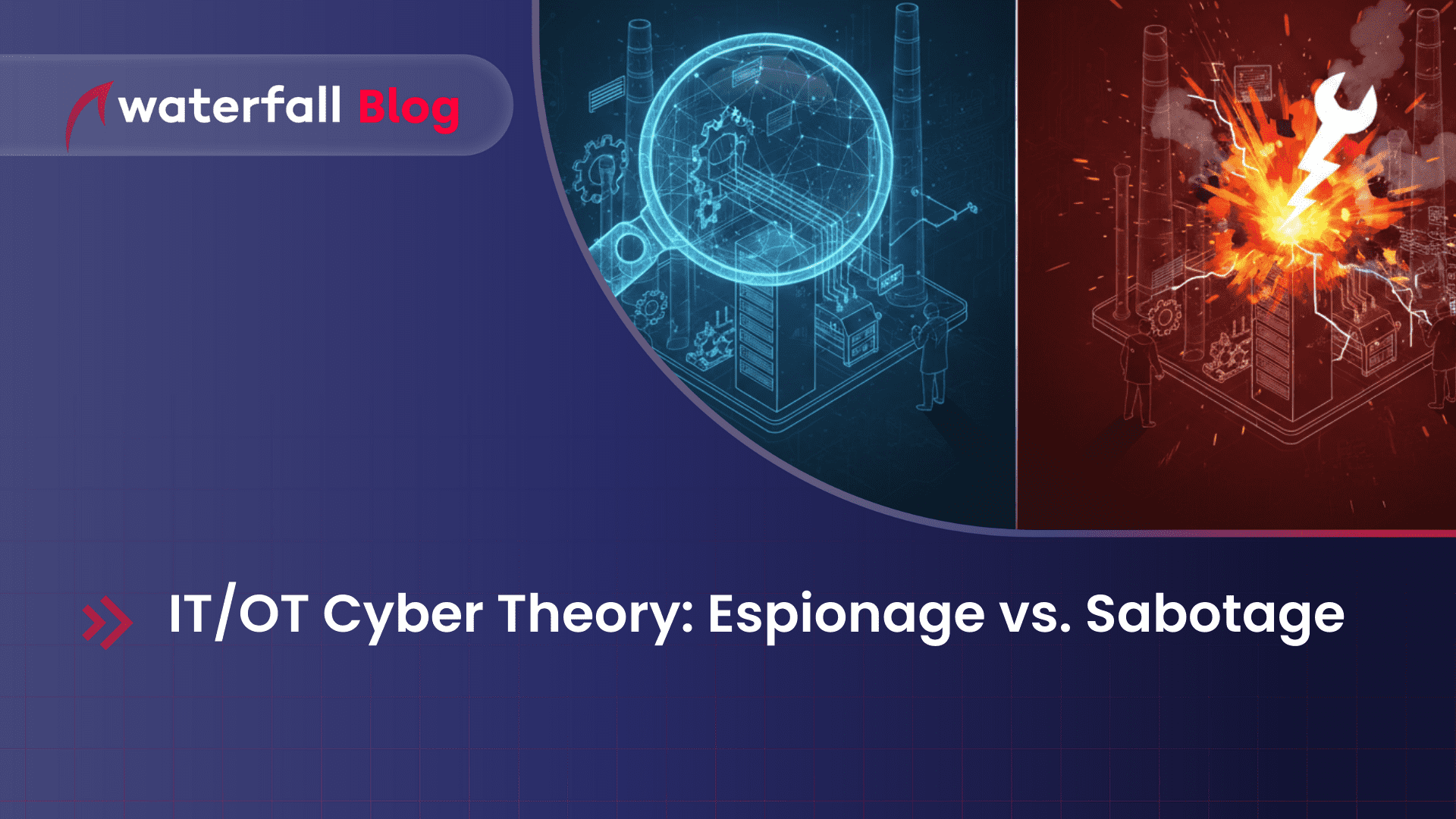
The second-generation of OT security advice started to emerge in 2012-2016.

“Everyone” has heard of the 5-week shutdown of Jaguar Land Rover by a cyber attack. That attack is the obvious headline for Waterfall’s up-coming webinar “Top 10 OT Cyber Attacks of 2025” that I’m currently researching.
